




7 Powerful Ways Business Intelligence for Insurance Wins Big
In the modern insurance landscape, carriers are navigating an increasingly complex environment. Rising customer expectations, stricter regulatory compliance, and mounting competition demand smarter strategies. In this scenario, business intelligence for insurance has become an essential tool that can transform raw data into actionable insights, driving both profitability and operational efficiency.
Insurance carriers that leverage BI are better equipped to anticipate market trends, optimize underwriting, manage claims efficiently, and enhance customer satisfaction. By integrating data analytics into strategic decision-making, insurers not only gain a competitive edge but also future-proof their operations.
Navigating Complexity with Strategic Intelligence
The Evolving Landscape for Insurance Carriers
Insurance has traditionally relied on historical data and manual processes to manage risk and performance. However, this approach is no longer sufficient. The landscape for insurance carriers has changed dramatically:
- Customer expectations are evolving: Modern customers demand fast, personalized service.
- Regulatory pressures are increasing: Compliance with data protection and industry regulations is essential.
- Competition is intensifying: Digital-first insurance companies are entering the market, forcing traditional carriers to innovate.
In this environment, traditional strategies are insufficient. Business intelligence for insurance enables carriers to not only respond to challenges but to anticipate them, turning complexity into opportunity.
Business Intelligence: The Cornerstone for Profit & Performance
Business intelligence is not just a technology it is a philosophy and a strategy. In the insurance sector, BI allows organizations to analyze vast amounts of data, detect trends, and make informed decisions.
The benefits are tangible:
- Data-driven decision-making replaces guesswork.
- Predictive analytics allow for proactive risk management.
- Operational insights streamline processes and reduce inefficiencies.
By adopting BI, insurance carriers can elevate their performance, increase profitability, and deliver superior customer experiences.
Understanding Business Intelligence in the Insurance Context
Defining BI, Reimagined for the Insurance Industry
At its core, business intelligence for insurance involves collecting, integrating, analyzing, and visualizing data to inform decision-making. This goes beyond simple reporting; it is about uncovering insights that can reshape strategy.
For instance:
- Predicting risk exposure based on historical claims.
- Identifying emerging fraud patterns before they result in losses.
- Segmenting customers to offer personalized policies.
By applying BI in these ways, insurance carriers transform data into a strategic asset.
The Foundational Components of an Insurance BI Ecosystem
A successful BI ecosystem for insurance carriers relies on several key components:
- Data Warehousing: Centralized repositories ensure all relevant data is accessible and consistent.
- Analytics Platforms: Advanced tools enable predictive modeling, risk analysis, and trend identification.
- Visualization Dashboards: Intuitive dashboards make complex insights actionable for decision-makers.
- Governance and Security: Policies and protocols ensure data integrity, regulatory compliance, and secure handling of sensitive information.
These elements work together to create a comprehensive BI ecosystem capable of driving measurable business outcomes.
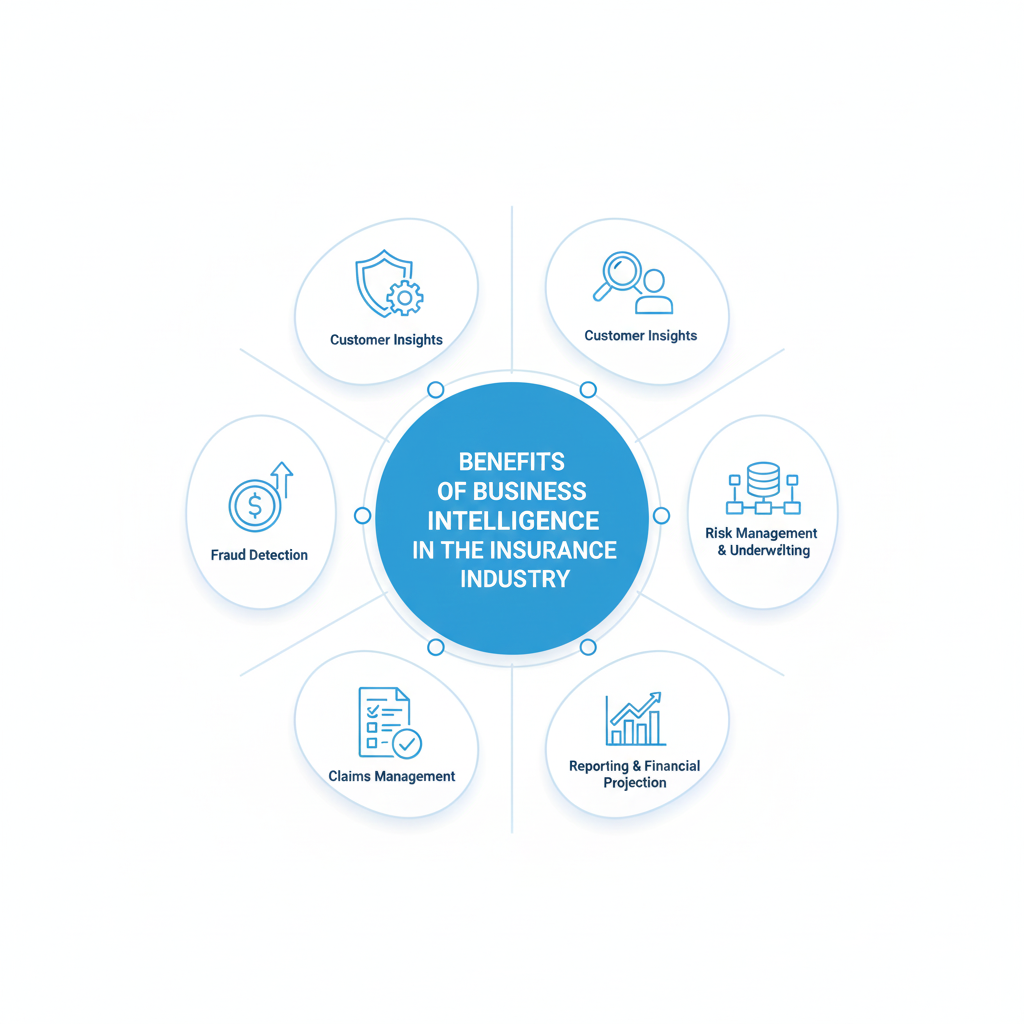
Driving Profitability: Core BI Applications for Insurance Carriers
Precision Underwriting and Dynamic Risk Assessment
Underwriting is the backbone of insurance profitability. Traditional methods rely heavily on historical data and manual evaluation, which can leave gaps in risk assessment. Business intelligence for insurance enhances underwriting in several ways:
- Predictive Modeling: Using historical claims data, AI models predict the likelihood of future claims, enabling precise pricing.
- Risk Segmentation: Customers and policies are segmented according to risk levels, allowing more informed decisions.
- Dynamic Adjustment: Real-time analytics enable underwriters to adjust policy terms based on emerging trends.
Case in point: A major U.S. insurer used BI-driven predictive analytics to reduce underwriting losses by 15% within a year, demonstrating the tangible impact of these insights.
Streamlined Claims Management & Aggressive Fraud Prevention
Claims processing is often time-consuming, costly, and prone to errors. BI transforms claims management by:
- Automating Routine Tasks: Reducing human error and freeing staff for complex cases.
- Fraud Detection Algorithms: Identifying suspicious claims patterns before payouts occur.
- Performance Metrics: Tracking claims processing efficiency and identifying bottlenecks.
For example, a European insurer deployed BI dashboards to monitor claims in real-time, resulting in a 20% reduction in processing time and a notable decrease in fraudulent claims.
Elevating Customer Experience and Retention
Customer experience is increasingly critical in the insurance industry. BI tools enable carriers to:
- Personalize Offers: Tailoring policies based on customer behavior and preferences.
- Proactive Service: Identifying potential churn risks and engaging customers preemptively.
- Omnichannel Insights: Integrating data from phone, email, mobile, and social media channels for a complete view.
A top Asian insurance provider leveraged BI to implement a customer retention program, reducing churn by 18% in two years.
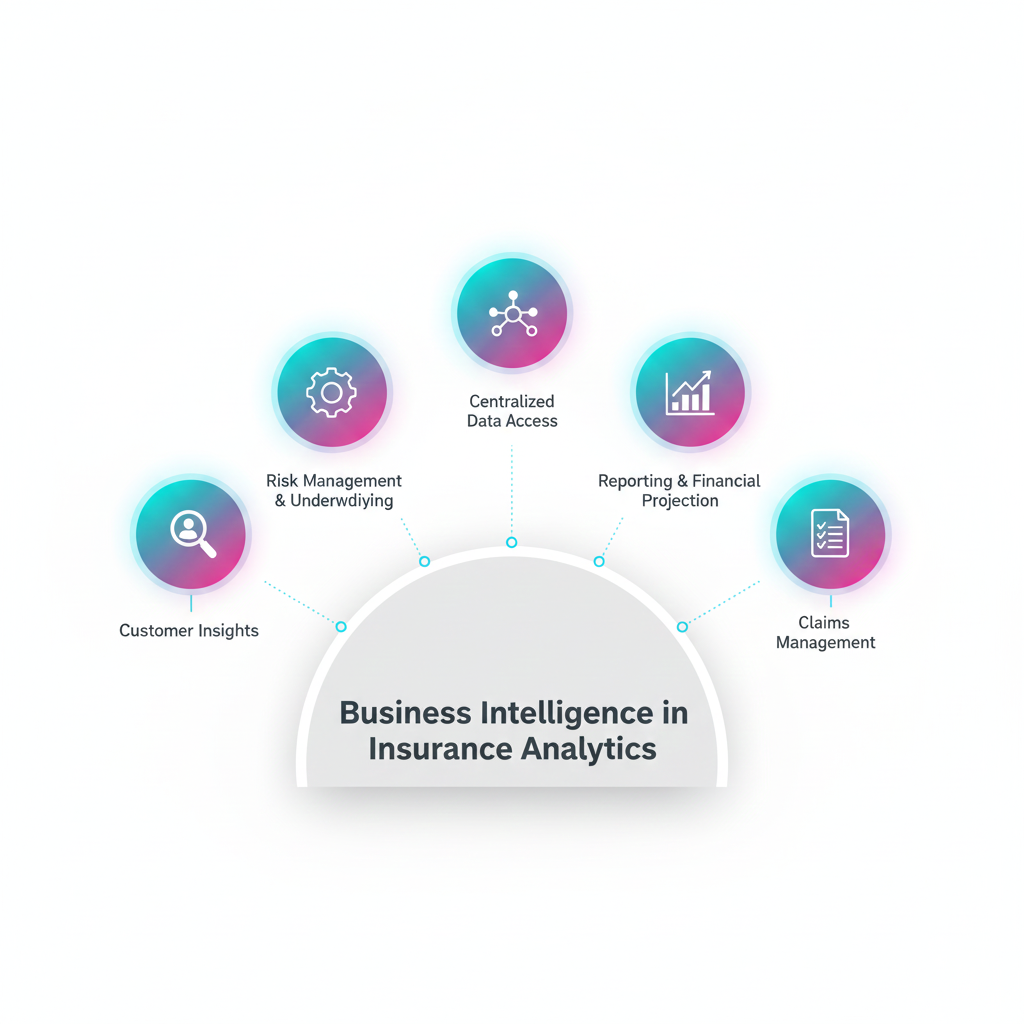
Operational Excellence and Efficiency Gains
Operational efficiency is directly tied to profitability. BI allows carriers to:
- Streamline Internal Processes: Automating reporting, workflow management, and decision approvals.
- Optimize Resource Allocation: Ensuring staff and capital are deployed efficiently.
- Monitor Key KPIs: Tracking performance metrics to continuously improve operations.
Operational excellence achieved through BI not only reduces costs but enhances service quality, creating a competitive advantage.
Implementing BI Strategically: A Roadmap for Sustainable Success
Defining Your BI Vision and Strategic Objectives
Before implementing BI, insurers must define a clear vision:
- Identify Business Goals: Are you focusing on claims efficiency, risk management, or customer retention?
- Prioritize Initiatives: Focus on high-impact areas to maximize ROI.
- Set Measurable Metrics: Define KPIs to track progress and success.
A well-articulated BI strategy aligns the organization, sets clear expectations, and drives adoption.
Building a Solid Data Foundation: Quality, Governance, and Security
BI relies on reliable, accurate, and secure data. Key steps include:
- Data Quality Management: Regular cleansing and validation of datasets.
- Governance Frameworks: Establishing rules for data usage, storage, and sharing.
- Security Measures: Protecting sensitive customer and policy data against breaches.
Strong data foundations ensure that BI insights are trustworthy and actionable.
Selecting and Integrating the Right BI Tools
Choosing the right tools is critical. BI solutions must be:
- Scalable: Supporting growth and increasing data volumes.
- Integratable: Seamlessly connecting with existing core systems.
- User-Friendly: Accessible to decision-makers across the organization.
Some insurers adopt hybrid approaches, combining cloud-based BI platforms with on-premises tools to balance flexibility, cost, and control.
Fostering a Data-Driven Culture and Adoption
Technology alone is not enough; people must embrace BI. Strategies include:
- Training Programs: Ensuring employees understand how to use BI effectively.
- Leadership Advocacy: Executive support for data-driven initiatives encourages adoption.
- Cross-Functional Collaboration: Promoting cooperation between departments to share insights and best practices.
Cultivating a data-driven culture ensures sustainable BI success and maximizes ROI.
The Future of Business Intelligence in Insurance: Emerging Horizons
Advanced Analytics, AI, and Machine Learning Integration
The next frontier of business intelligence for insurance includes AI-driven predictive analytics. These technologies can:
- Forecast Emerging Risks: Identifying potential market or policy threats before they occur.
- Automate Decision-Making: Streamlining underwriting and claims processing.
- Optimize Customer Engagement: Predicting customer needs and proactively offering solutions.
Forward-thinking carriers that embrace these capabilities gain a significant competitive advantage.
Embracing New Data Streams and Technologies
IoT devices, telematics, wearable technology, and social media provide new data streams. BI enables insurers to:
- Integrate Diverse Data Sources: Creating richer insights from unstructured and structured data.
- Enhance Risk Assessment: Using real-time data to better predict claims.
- Improve Customer Insights: Understanding behaviors, preferences, and potential policy needs.
Insurers who harness these technologies can innovate faster and better serve their clients.
BI as a Continuous Strategic Advantage
BI is not a one-off project; it is an ongoing journey. Continuous monitoring, analytics, and refinement allow insurers to:
- Adapt to Market Changes: Quickly respond to competitive and regulatory shifts.
- Identify New Opportunities: Spot trends, niche markets, or emerging risks.
- Maintain Operational Excellence: Continuously optimize processes for efficiency and profitability.
Sustained investment in BI ensures that carriers remain agile, informed, and ahead of the competition.
Intelligence as Your Indispensable Competitive Edge
Recap of Transformative Benefits
From precision underwriting to improved customer experience, business intelligence for insurance delivers tangible results. It empowers carriers to make smarter decisions, reduce costs, and enhance profitability.
The Imperative for Data-Driven Action
In an industry where competition is fierce and margins can be tight, adopting BI is no longer optional. Carriers who embrace a data-driven mindset and strategically implement BI tools are positioned to win big, achieving both short-term results and long term sustainability.