

Blockchain in Intellectual Property 2026: Protect IP & NFTs
Intellectual property theft costs the global economy billions every year. Piracy, counterfeits, and ownership disputes drain creators, brands, and innovators of their rightful revenue and recognition.
Blockchain technology offers a solution: immutable proof of creation, transparent ownership records, and automated licensing through smart contracts.
In this guide, you’ll learn how blockchain protects intellectual property, explore real-world use cases, understand the benefits and challenges, and discover what the future holds for IP management in Blockchain in Intellectual Property in 2026 and beyond.
IP industry focus is shifting to authentication & supply chain transparency
The European Union Intellectual Property Office (EUIPO) has moved beyond pilot programs into active promotion of blockchain authentication infrastructure. Luxury brands and manufacturers are using blockchain to verify product authenticity at every step of the supply chain.
Smart contracts + AI licensing automation is becoming mainstream
The tech and creative industries are rapidly adopting smart contracts combined with AI to automate licensing agreements. This reduces negotiation time from weeks to minutes and ensures creators receive royalties instantly.
NFT ownership ≠ copyright (biggest misunderstanding)
Many people believe buying an NFT means owning the copyright to the digital asset. The US Copyright Office has clarified that NFTs typically represent proof of ownership of a specific token, not the underlying intellectual property rights. This remains one of the most misunderstood aspects of blockchain and IP.
Blockchain & Intellectual Property | Quick Definitions
Blockchain is a digital ledger that records information across multiple computers. Three key features make it powerful:
Decentralization: No single authority controls the data.
Immutability: Once recorded, information cannot be altered or deleted.
Timestamping: Every entry is permanently marked with date and time.
What is IP?
Intellectual property (IP) refers to creations of the mind that have commercial value:
- Copyright: Protects original creative works (music, writing, art, software)
- Patents: Protects inventions and processes
- Trademarks: Protects brand names, logos, and identifiers
- Trade secrets: Protects confidential business information
Why Traditional IP Protection Struggles Today
Traditional intellectual property systems face serious challenges:
Ownership proof delays: Registering copyright or patents can take months or years, leaving creators vulnerable during that period.
Piracy & illegal distribution: Digital content spreads instantly online, making it nearly impossible to track and stop unauthorized copies.
Counterfeit products: Fake goods flood markets, damaging brand reputation and costing companies billions in lost revenue.
Complicated licensing & royalty disputes: Manual contracts and payment systems lead to delays, errors, and conflicts over who owns what percentage.
Cross-border enforcement issues: IP laws vary by country, making international protection expensive and complex.
Example: An independent musician releases a song online. Within hours, it’s uploaded to dozens of piracy sites. By the time they file copyright claims, thousands of illegal downloads have already happened, and tracking every infringer becomes impossible.
How Blockchain Solves IP Problems
Proof of Creation & Ownership (Timestamp + Hash)
Blockchain creates a “proof of existence” for any creative work. When you create something, you generate a unique digital fingerprint (hash) of that content and record it on the blockchain with a timestamp.
This proves you created that specific work at that specific time. The World Intellectual Property Organization (WIPO) recognizes blockchain models as viable systems for establishing IP ownership timelines.
Blockchain based IP Registry (Public/Private registries)
Several IP offices worldwide are exploring blockchain registries. These digital databases store ownership records, transfer histories, and licensing agreements in a transparent, tamper-proof format.
Unlike traditional paper-based or centralized digital systems, blockchain registries allow anyone to verify ownership without relying on a single authority.
Smart Contracts for Automated Licensing & Royalties
Smart contracts are self-executing agreements written in code. They automatically enforce terms and distribute royalty payments when specific conditions are met.
For example: A photographer licenses their image for commercial use. The smart contract automatically sends 70% of the fee to the photographer, 20% to their agent, and 10% to the platform instantly, every time the image is used.
Anti-Counterfeiting & Supply Chain Authentication
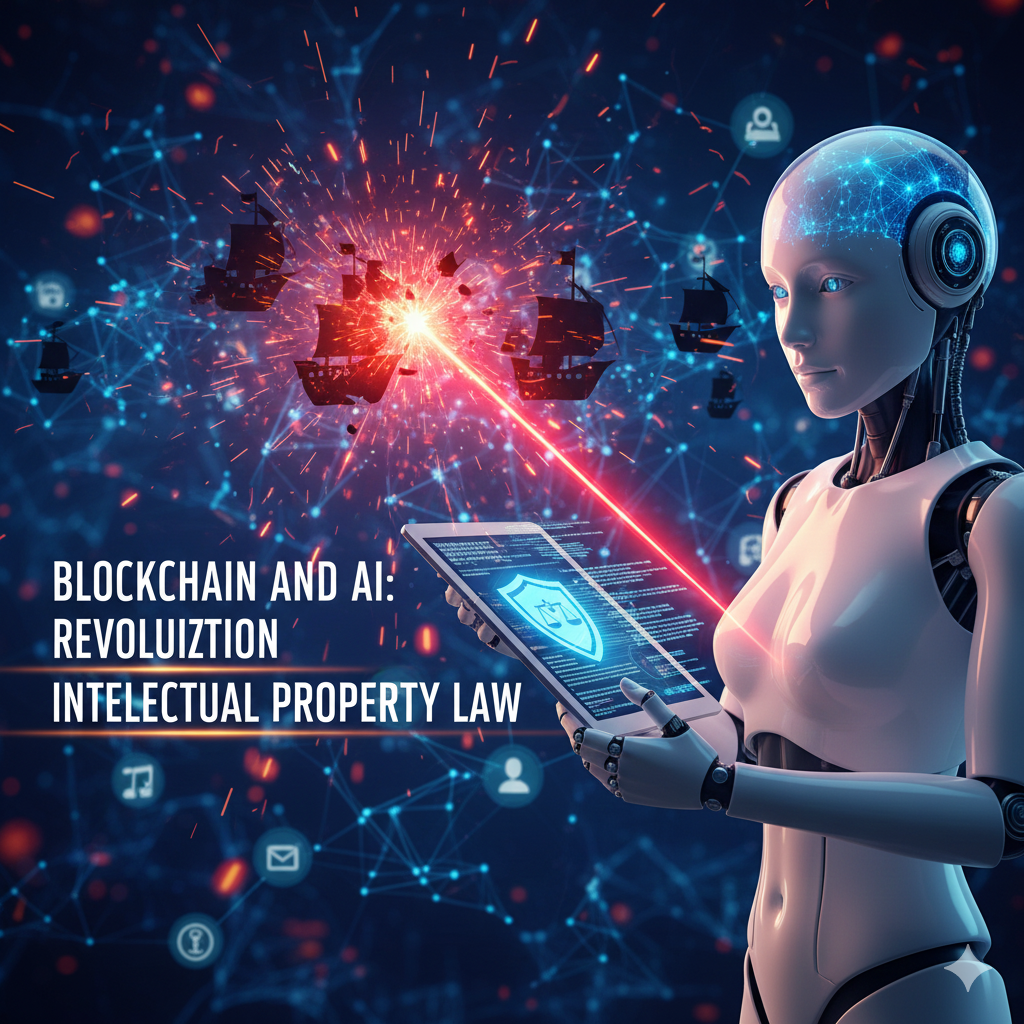
The EUIPO blockchain authentication infrastructure helps brands fight counterfeits by creating unique digital certificates for physical products. Each item gets a blockchain record that tracks its journey from manufacturer to consumer.
Customers can scan a QR code or NFC tag to verify authenticity instantly. Counterfeiters cannot replicate blockchain records, making fake products easier to identify.
NFTs & Digital Ownership
NFTs (Non-Fungible Tokens) prove you own a specific digital collectible or token. However, owning an NFT does not automatically give you copyright to the underlying work.
The US Copyright Office report emphasizes: buying an NFT typically grants you ownership of that token and potentially some usage rights, but the original creator usually retains full copyright unless explicitly transferred.
The Blockchain IP Protection Process
- Create content (song, design, invention, document)
- Generate hash (unique digital fingerprint of your file)
- Store hash/timestamp on blockchain (permanent, unchangeable record)
- Verify anytime (prove you created it first)
- License via smart contract (automate permissions and payments)
Use Cases by IP Type
Blockchain for Copyright (music, videos, writing)
Musicians, filmmakers, and authors use blockchain for copyright protection to:
- Automatically track where their content appears online
- Receive instant royalty payments when their work is streamed or downloaded
- Prove ownership if someone claims they created it first
Platforms like Audius and Ujo Music use blockchain to connect creators directly with audiences while ensuring fair payment.
Blockchain for Patents (innovation logs + ownership trails)
Inventors and researchers use blockchain patent protection to:
- Create timestamped records of every development stage in their research
- Establish clear ownership trails when multiple parties contribute
- Support patent filing with immutable evidence of invention dates
This is especially valuable in industries where patent disputes are common, like pharmaceuticals and technology.
Blockchain for Trademarks (brand authenticity & counterfeit protection)
Brands use blockchain intellectual property rights systems to:
- Authenticate products throughout the supply chain
- Allow customers to verify genuine products via QR codes or NFC chips
- Track gray market goods and unauthorized distributors
EUIPO-supported implementations help luxury fashion brands like Prada combat counterfeiting.
Blockchain for Trade Secrets (secure timestamp + access control)
Companies protect confidential information using blockchain to:
- Create encrypted, timestamped records of proprietary processes
- Control who can access sensitive information with smart contracts
- Maintain audit logs showing exactly when and how trade secrets were shared
This adds a layer of proof if trade secret theft ever goes to court.
Best Real World Applications 2026 Trends
Fashion & Luxury anti counterfeiting PRADA & others
High-end fashion brands are leading blockchain adoption. Prada, LVMH, and Cartier use blockchain to create digital certificates of authenticity for handbags, watches, and jewelry.
The EUIPO pilots have expanded into full-scale authentication systems that protect both brands and consumers from counterfeit luxury goods.
Creative economy & NFT marketplaces (royalties debate)
NFT platforms like OpenSea and Foundation use blockchain IP management to enable:
- Programmable royalties that pay creators every time their work resells
- Transparent ownership history for digital art and collectibles
- Direct creator-to-collector relationships without intermediaries
However, debates continue about enforcement of creator royalties and the complexity of copyright in NFT transactions.
Tech industry licensing using smart contracts + AI
Software companies and tech firms are implementing smart contracts for IP licensing combined with AI detection systems. This allows:
- Instant licensing negotiations for patents and software components
- Automated compliance monitoring across global markets
- Real-time royalty calculations based on usage data
Research shows that smart contracts reduce licensing transaction costs by up to 90% compared to traditional legal processes.
Benefits of Blockchain in Intellectual Property
| Benefit | Why It Matters | Example |
| Transparency | All parties can verify ownership and transaction history | A musician proves they created a melody before someone else claimed it |
| Immutable proof | Records cannot be altered or deleted | Patent timeline evidence that survives legal challenges |
| Reduced disputes | Clear ownership records minimize conflicts | Smart contracts eliminate royalty payment arguments |
| Faster licensing | Automated agreements replace slow negotiations | Software licensing completed in minutes instead of weeks |
| Automated royalty payments | Creators receive earnings instantly | Photographers paid immediately when images are licensed |
| Anti-counterfeit trust | Customers verify product authenticity instantly | Luxury handbag buyers confirm genuine products via blockchain certificate |
The WIPO ecosystem overview recognizes these benefits as transformative for how blockchain protects intellectual property globally.
Challenges & Legal Issues (EEAT / Trust Builder)
Legal recognition varies by country
Not all courts accept blockchain records as definitive legal proof. Some jurisdictions require traditional registration in addition to blockchain timestamps.
Blockchain ≠ court decision (evidence vs enforceability)
A blockchain record proves you created something first, but it doesn’t automatically win legal battles. Courts still interpret IP law based on many factors beyond timestamps.
Privacy & confidential data risks
Public blockchains expose all transaction data. For sensitive IP, this creates risks if competitors can analyze your filing patterns or business relationships.
Smart contract vulnerabilities
Coding errors in smart contracts can lead to lost funds or unintended licensing terms. Once deployed, these contracts are difficult or impossible to modify.
Garbage in problem (wrong data stored)
Blockchain only proves that something was recorded at a specific time. It cannot verify whether that information is accurate, complete, or rightfully yours.
Mitigation strategies: Hybrid models combining blockchain with traditional verification, permissioned blockchains for confidential IP, and evolving legal frameworks that integrate blockchain evidence with existing IP law.
Future of Blockchain in IP 2026 and beyond
Decentralized IP marketplaces (instant licensing)

Imagine a global marketplace where creators list their IP and buyers license it instantly through smart contracts—no lawyers, no weeks of negotiation, just automated, transparent transactions.
Global interoperable IP registries
Multiple countries are exploring interconnected blockchain registries. In the future, a patent registered in one country could be instantly recognized and protected across dozens of nations.
AI + blockchain for detection of plagiarism & counterfeit content
Artificial intelligence systems will scan the internet for unauthorized copies while blockchain records provide instant proof of original ownership. This combination could dramatically reduce piracy.
Government led authentication infrastructure (EUIPO model)
Following the EUIPO’s success, more governments are developing official blockchain-based enforcement and authentication systems. These initiatives will standardize how blockchain based IP registry systems operate globally.
Conclusion
Blockchain in intellectual property represents a powerful shift in how we protect and manage creative works, inventions, and brands. The technology offers transparent proof of ownership, automated licensing through smart contracts, and robust anti-counterfeiting systems.
However, blockchain is not a complete solution. Legal frameworks are still evolving, technical challenges remain, and global adoption is uneven. The most effective approach combines blockchain’s strengths with traditional IP protection methods.
Creators, brands, and innovators should explore blockchain-based protection now. As systems mature and legal recognition expands, early adopters will gain competitive advantages in protecting their most valuable intellectual assets.
The future of IP management is decentralized, automated, and transparent—and that future is already taking shape in 2026
FAQs
Can blockchain prove copyright ownership legally?
Blockchain provides strong evidence of creation date and ownership, but legal recognition varies by jurisdiction. Most courts accept it as supporting evidence alongside traditional copyright registration.
Does buying an NFT give copyright rights?
No. Purchasing an NFT typically grants ownership of the token itself, not the copyright to the underlying work. The creator retains copyright unless explicitly transferred in writing.
How do smart contracts distribute royalties?
Smart contracts for copyright licensing automatically calculate and send payments when specific conditions trigger (like a sale or stream). The code executes without human intervention, ensuring instant, accurate distribution.
Can blockchain stop piracy completely?
No. Blockchain cannot prevent illegal copying, but it makes proving ownership easier and enables automated detection of unauthorized use when combined with monitoring systems.
What is a blockchain-based IP registry?
A blockchain based IP registry is a decentralized database that stores ownership records, timestamps, and licensing agreements for intellectual property in a tamper-proof, publicly verifiable format.
How does blockchain help fight counterfeits?
Products get unique digital certificates stored on blockchain. Customers scan codes to verify authenticity instantly. Counterfeiters cannot replicate legitimate blockchain records, exposing fake goods.
Is blockchain IP system accepted worldwide?
Adoption varies significantly. Some countries actively develop blockchain IP infrastructure while others maintain traditional systems. Global standards are still emerging.
Which industries benefit most?
Creative industries (music, art, film), luxury goods, pharmaceuticals, software, and manufacturing see the greatest benefits from blockchain in intellectual property through improved tracking, authentication, and automated licensing.