

Search Google or Type a URL Unlock Faster Browsing
When someone opens Google Chrome, the very first thing they interact with is not a website, a button, or a menu, but the address bar. This single input field decides how a user enters the internet.
It determines whether someone is taken to Google Search results or lands directly on a specific website. Although it looks small and simple, it plays a major role in how fast, smooth, and accurate the browsing experience feels.
Most users type something into the address bar every single day, yet very few truly understand how it works. Some people assume it is only for typing website addresses, while others think it is just a search box.
In reality, it is both. Understanding this feature properly helps users browse faster, avoid mistakes, and feel more in control while using the internet.
This article explains everything about the Chrome address bar in simple words. It covers how it works, why it sometimes behaves in unexpected ways, how to fix common problems, and how users can use it more efficiently without technical knowledge
Understanding the Chrome Address Bar
The address bar in Google Chrome is officially called the Omnibox. The name itself explains its purpose. The word “Omni” means all, which shows that this single bar is designed to handle multiple tasks at once.
Instead of having separate boxes for searching and typing website addresses, Chrome combines everything into one place.
This design makes browsing faster and easier because users do not need to decide whether they want to search or open a website first. Chrome automatically makes that decision based on what the user types.
Over time, Chrome also learns from user behavior and becomes better at predicting user intent, which further improves the browsing experience
How the Omnibox Handles User Input
When a user types normal words or phrases into the Omnibox, Chrome understands this as a search query and sends it to Google Search.
Search Queries vs Direct URLs
For example, if someone types “best laptops for students,” Chrome displays results on the Search Results Page. This is useful when the user is looking for information, comparisons, or answers.
On the other hand, when a user types a recognizable domain name or a structured web address, Chrome treats it as a URL. Typing “wikipedia.org” or “https://www.youtube.com” tells Chrome to open the website directly. In this case, Chrome skips search results entirely and loads the website instantly.
Chrome also uses browsing history and memory. If a user frequently visits a website, Chrome may open it even when only part of the name is typed, saving time and effort
What Happens in the Background
Behind the scenes, several technical processes work together to make this experience smooth and fast
How Chrome Connects to Websites
When a URL is entered, Chrome uses DNS to translate the domain name into an IP address. This IP address tells Chrome where the website is located on the internet. Once the connection is established, Chrome checks whether the website uses HTTP or HTTPS.
Secure websites use HTTPS, which protects data during transmission. All of these steps happen in milliseconds and remain invisible to the user, but they are essential for safe and reliable browsing
Why Chrome Sometimes Searches Instead of Opening a Website
Many users face a common issue where Chrome searches instead of opening the website they expected to load directly. This can feel confusing and frustrating, especially when users believe they typed the correct address
Common Reasons for This Behavior
This usually happens because Chrome cannot clearly identify the input as a valid URL. Missing parts of a domain name, such as typing “facebook” instead of “facebook.com,” can cause Chrome to treat the input as a search query.
Autofill settings also play an important role. If autofill is disabled, Chrome may struggle to predict user intent. Browser extensions can interfere as well, especially those that modify search behavior or redirect queries. In addition, if the default search engine has been changed, Chrome may behave differently than expected.
Understanding these reasons helps users realize that this is not a bug, but a result of unclear input
Fixing Address Bar Problems Easily
The good news is that most address bar issues are easy to fix and do not require technical skills.
Simple Steps to Restore Normal Behavior
Resetting Chrome’s default settings is often the fastest solution. This removes unwanted changes while keeping bookmarks and saved passwords safe.
Clearing cached data helps Chrome refresh stored information and remove conflicts caused by outdated files.
Users should also review installed extensions and remove any that are unnecessary or suspicious. Finally, confirming that Google Search is set as the default search engine ensures that Chrome behaves correctly when handling searches and URLs
When the Placeholder Text Disappears
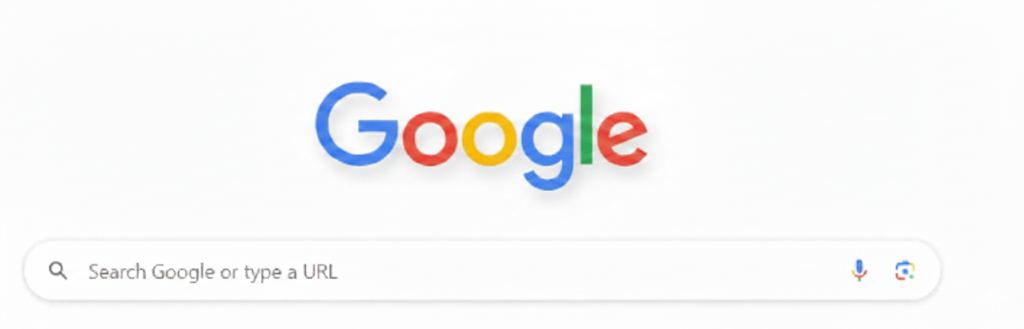
Some users notice that the text “Search Google or type a URL” disappears from the address bar, which can cause concern.
Why This Happens
This usually occurs due to visual changes rather than functional issues. Chrome updates, theme changes, accessibility settings, or enabling dark mode can affect how the address bar looks.
Even when the placeholder text is not visible, the Omnibox continues to work normally. This change does not affect speed, accuracy, or usability
Improving Visual Comfort While Browsing
Visual comfort is an important part of the browsing experience, especially for users who spend long hours online.
Using Dark Mode and Themes
Chrome offers dark mode and a variety of themes that change the appearance of the address bar and browser interface.
Dark mode reduces brightness and makes text easier to read in low-light environments. Themes allow users to personalize colors and backgrounds while keeping the core functionality unchanged
Customizing Chrome Safely
Personalization helps users feel more comfortable and productive while browsing.
Personalization Options That Don’t Affect Performance
Although users cannot directly change the text inside the address bar, they can customize Chrome using themes, new tab layouts, and trusted extensions.
Custom backgrounds, shortcut layouts, and visual adjustments improve usability without slowing down the browser or compromising security
Using the Address Bar for Productivity
The address bar is not limited to navigation. It can also work as a productivity tool
Everyday Tasks from the Omnibox
Users can perform calculations, convert units, check the weather, look up definitions, and search specific websites directly from the address bar.
Chrome also supports shortcuts and search operators that help users complete tasks faster and with fewer clicks
Searching Specific Websites Directly
Instead of opening a website first and then searching inside it, users can search a specific website directly from the address bar
Why This Is Useful
This approach saves time and improves accuracy, especially for research, online shopping, and learning.
Chrome supports advanced Google Search operators that help narrow results and remove irrelevant pages without leaving the Omnibox
Why the Omnibox Is Faster Than Traditional Browsing
Traditional browsing usually involves opening a search engine, typing a query, clicking links, and navigating menus
How the Omnibox Simplifies Browsing
The Omnibox combines searching, navigation, and shortcuts into one place. By understanding how Chrome interprets input, users can skip unnecessary steps and enjoy a faster, smoother browsing experience
Security Behind Every Search and Website Visit
Security is a core part of how Chrome works.
How Chrome Keeps Browsing Secure
Chrome uses HTTPS encryption to protect data during transmission. DNS helps locate websites accurately, and IP addresses ensure proper connections.
These systems work together to keep users safe while browsing and help them recognize secure websites
Conclusion
The phrase “Search Google or type a URL” may look simple, but it represents one of the most powerful features in modern web browsing.
When users understand how it works and how to use it correctly, they gain more control, better speed, and a smoother online experience. Mastering the Chrome address bar allows users to browse smarter, not harder